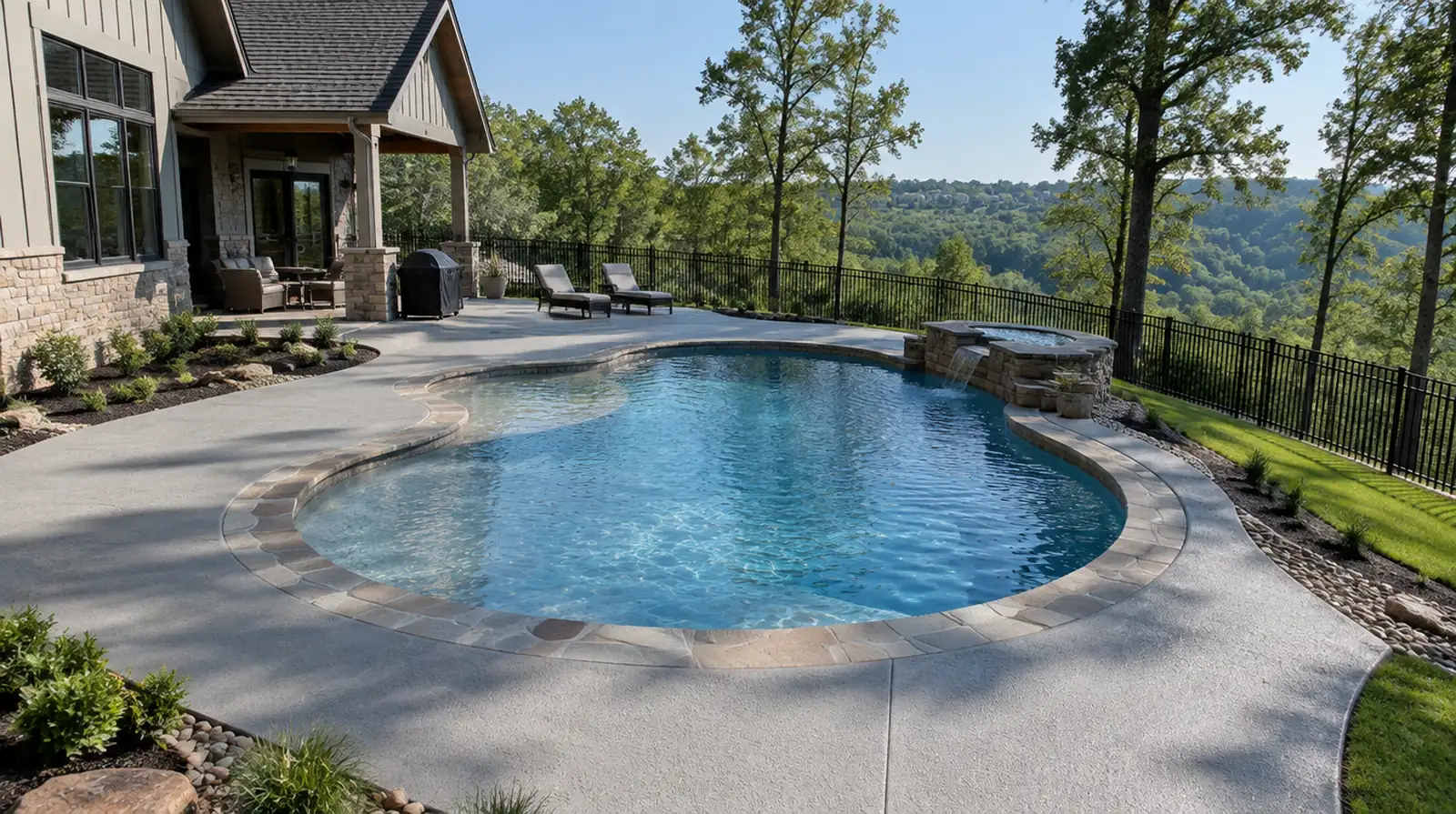
Ozark weather versus a bare deck
Fayetteville summers are hot and humid, with highs often in the low 90s, and bare concrete soaks up that heat. Winters swing through freeze-thaw cycles that pull water into the surface and pop off thin flakes, especially on older broom-finished decks. Ice storms a few times a decade make things worse when meltwater sits in cracks overnight.
Under many decks is Northwest Arkansas clay mixed with chert. Clay shrinks in dry spells and swells when soaked, so decks crack at corners, steps and along the coping. A coating will not stop the ground from moving, but flexible crack repair plus a textured overlay can make a working deck safe and comfortable again without a full tear-out.
Systems that fit this climate
- Spray knockdown. Acrylic-cement texture that cools the surface and hides repaired cracks.
- Polyaspartic with aggregate. Fast-curing, UV-stable finish with broadcast grit for wet traction.
- Sealer-only refresh. For newer decks that only need protection, covered under concrete sealing.
Indoor garage epoxy is the wrong product outdoors here. It yellows in sun and becomes slick with pool water and pollen film.
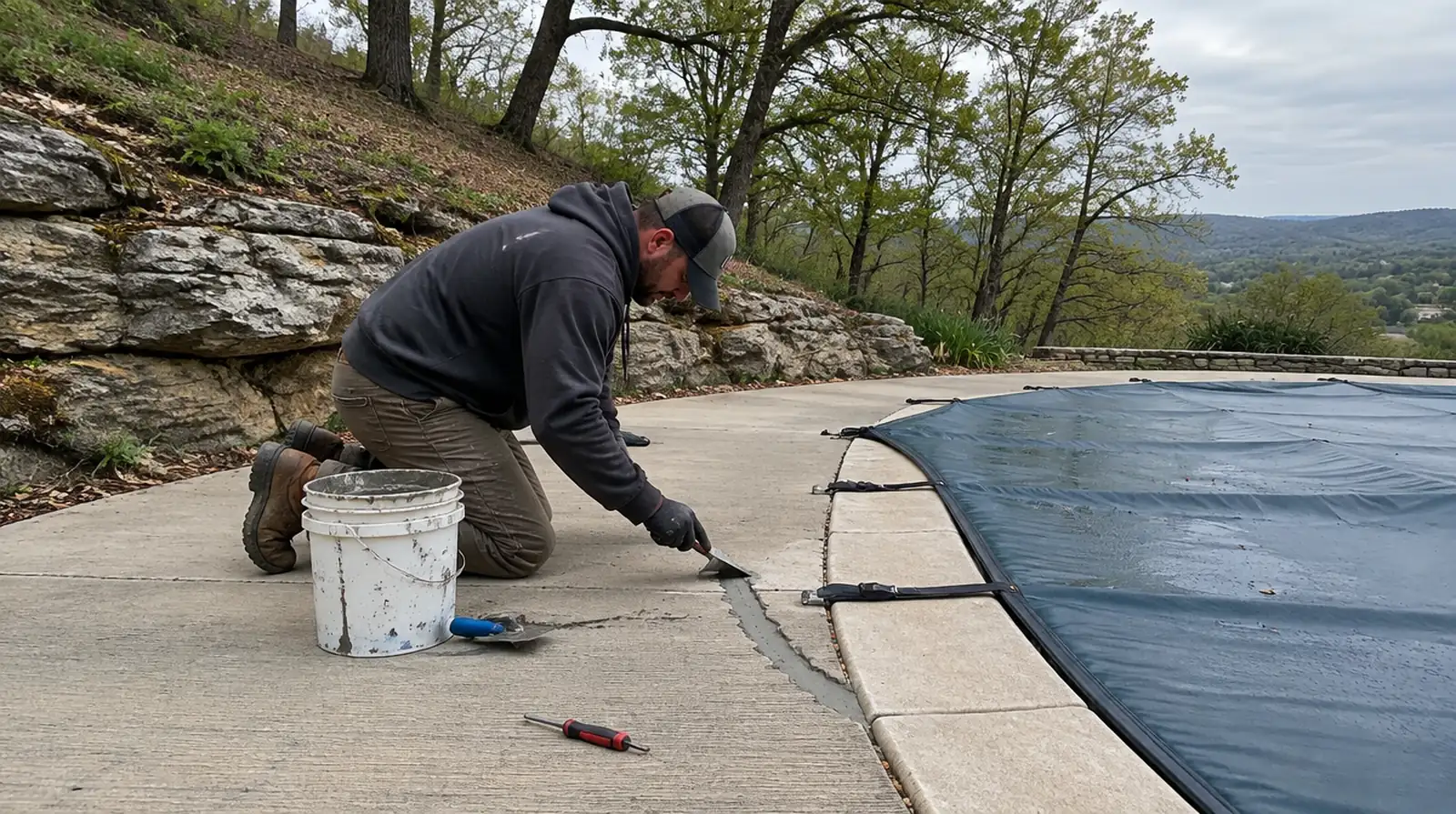
Prep on hillside lots
We start with a hard clean to cut algae, pollen and sunscreen residue. Scaled or delaminated areas are ground to sound concrete. Cracks get flexible fill, and the coping joint is cleaned and resealed so the pool shell and deck are not locked together. On steeper College Avenue–corridor and Mount Sequoyah–area lots, we also check that deck drainage still sheds away from the house rather than into a downhill neighbor's yard.
Colors and local light
Light gray, sandstone and soft tan stay cooler and hide the fine red clay dust that settles on every outdoor surface here. Sample boards come outside so you can see colors in Fayetteville light, not only under a shop lamp. Many homeowners match stone veneer or trim already on the house.
Timing around seasons
Late March through May and September through early November are the most reliable cure windows. Midsummer installs run early in the day so the slab is not scorching. A typical deck needs two to four days. Keep oak and pine pollen rinsed off in spring so it does not embed in a fresh topcoat.
Driveways that share the same clay movement issues are a separate outdoor system; see driveway coating.
Pollen, leaves and winter care
Spring oak pollen turns every horizontal surface yellow. Rinse the new coating often during that stretch so the film does not bake into the texture. In fall, wet leaves left in a pile can stain lighter colors; a quick blow-off after storms is enough. For winter traction on steps leading to the deck, use sand rather than rock salt. Salt leftover from the driveway will pit a cementitious texture over a few seasons.
If part of the deck has already sunk enough to pond water against the house, coating alone will not fix the pitch. We will flag that during the visit so you can decide on lifting or panel replacement before we lock in a color.
HOAs, rentals and hillside neighbors
Student rentals and long-term homes share many Fayetteville streets. If you manage a rental with a pool, a durable textured deck reduces slip claims and cleans faster between tenants. On hillside lots, we are careful about grind dust and runoff so downhill neighbors are not surprised. Written scopes include how we contain dust and where wash water goes.
Pool deck coating questions
My deck has hairline cracks everywhere. Can you still coat it?
Usually yes after routing and flexible repair. We will show you which cracks are cosmetic and which need real work.
Do you drain the pool?
Almost never. We cover the water during grinding and keep debris out of the system.
Do you serve nearby towns?
Yes, including Springdale, Johnson and Farmington when routes allow.
Ready the deck for swim season
Call (479) 332-3397. We will check clay-related cracks, coping joints and texture wear, then price the job in writing.