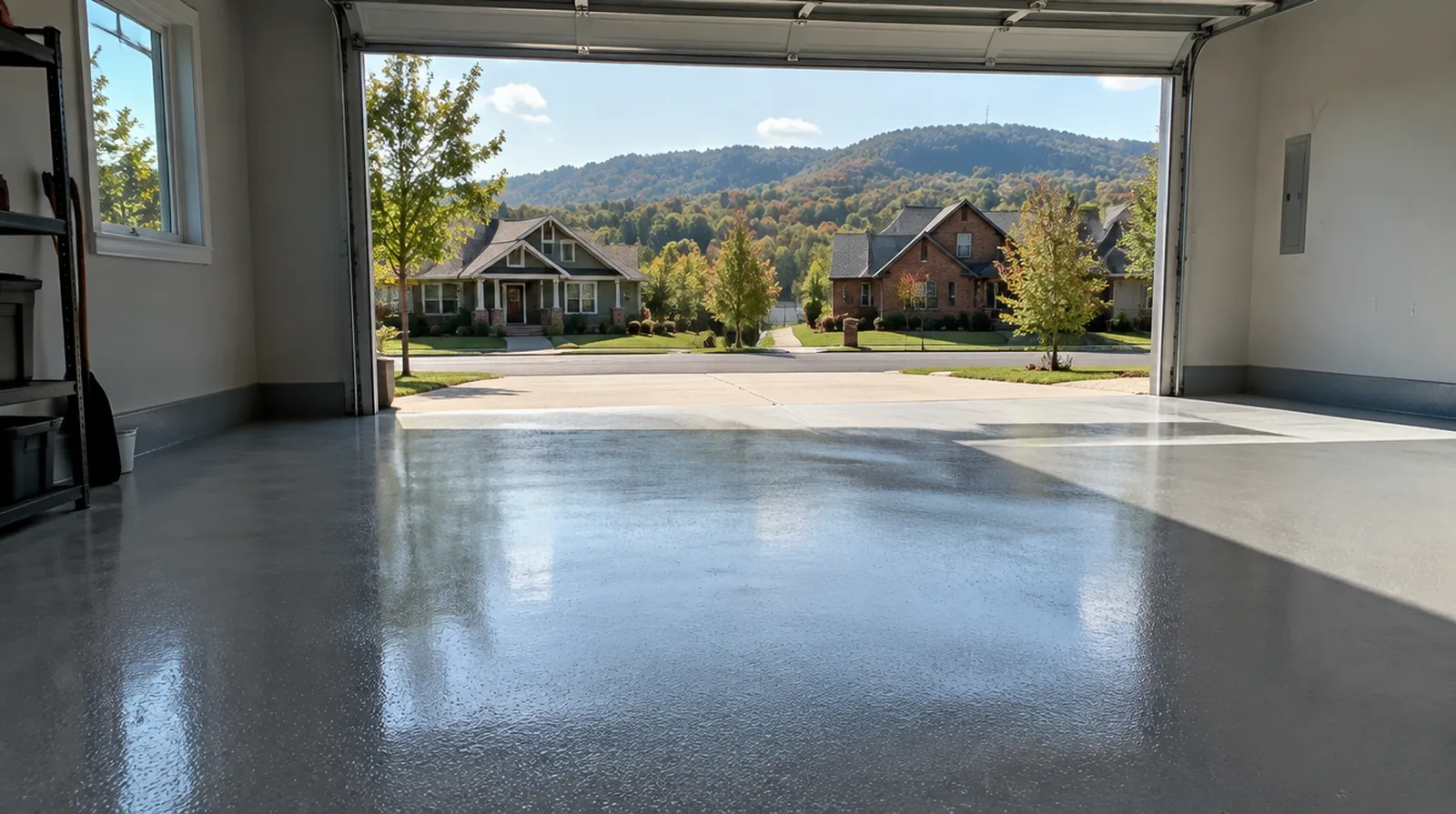
Why hillside garages are different
Water moves downhill through the soil, and the uphill side of a slab often stays damp. Older homes rarely have a vapor barrier under the concrete. That moisture pushes up on coatings and causes bubbles or peeling. We test, and if needed, use a primer made to hold it back.
Our garage system
- Grind: diamond tooling with vacuums removes the weak surface and old sealers.
- Repair: cracks, spalls and pop-outs from freeze damage get filled and ground smooth.
- Prime: a penetrating primer soaks into the concrete.
- Color: a pigmented body coat, plain or with flake.
- Top: a clear coat for wear and easy cleaning.
Winter grit and salt
After an ice storm, trucks bring in salt and gravel. A coated floor keeps that brine on top so you can squeegee it out the door. On bare concrete it soaks in and can flake the surface over time.
Timing
Most garages take two days. If you need it faster, ask about polyaspartic.
Will the coating crack if the slab cracks?
A moving crack can telegraph through any coating. We fill and treat cracks to reduce that, and we will tell you if one looks active.
Can you coat the garage steps too?
Yes, steps and the threshold are common add-ons.
A Fayetteville garage floor, done right
Garage floor epoxy in Fayetteville has to deal with slopes, moisture and winter salt. We test the slab, grind it to open the concrete, repair cracks and spalls, and build a system with a moisture-tolerant primer where needed, a body coat with color or flake, and a tough clear top.
Questions about garage floors
Can I park during winter installs? Cure times run longer in cold weather. We will give you an exact time.
Will my sloped floor stay sloped? Yes, the coating follows the slope, which keeps water moving toward the door.
Do you coat garages in condos? Yes, with HOA approval.
What drives the price
Size, the condition of the slab, how much crack repair is needed and the system you pick all affect cost. Hillside garages with moisture may need a special primer. We spell out every line in a written quote, and we explain where you can save and where we would not cut corners.
Tuck-under garages and the gear that fills them
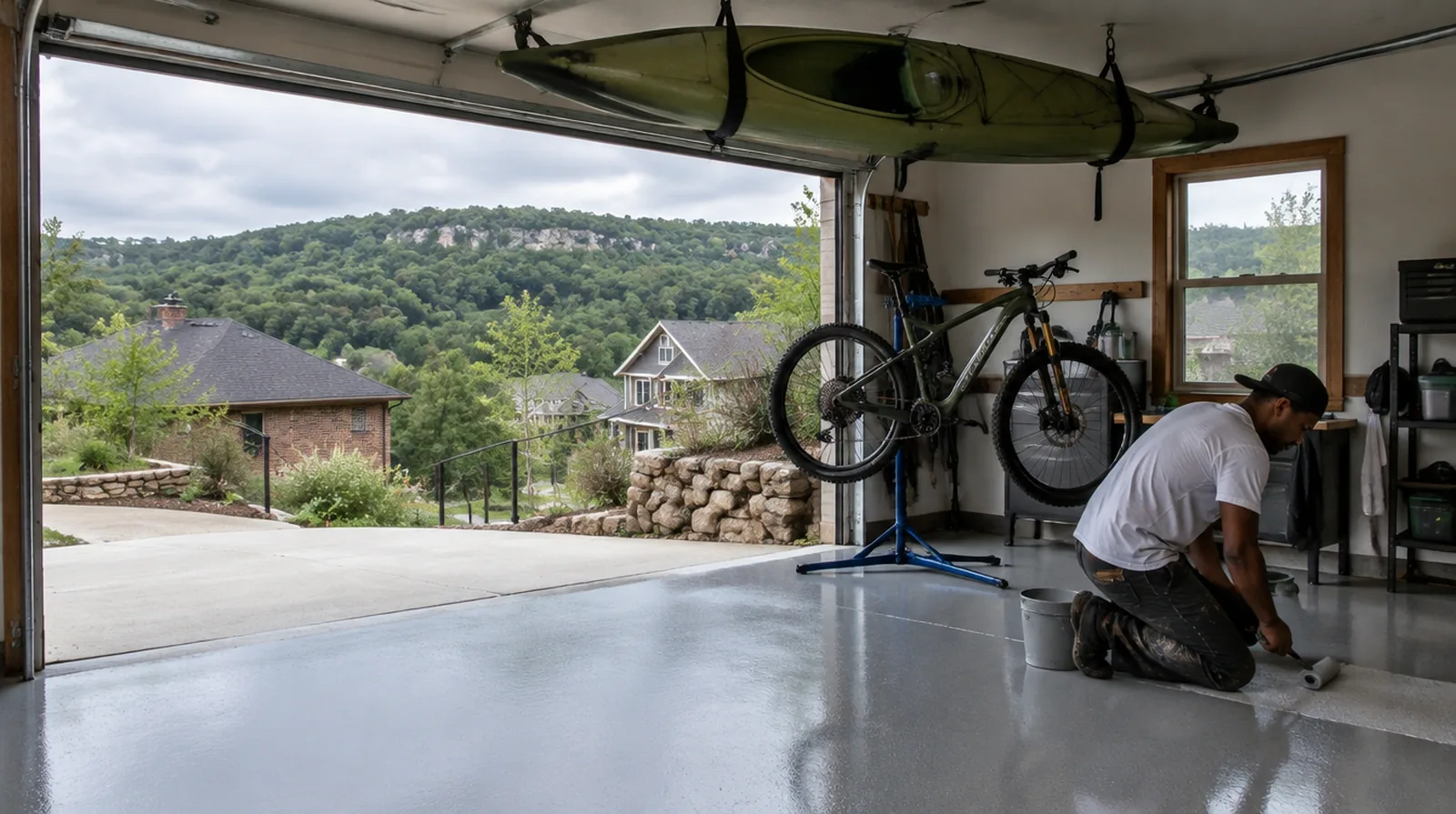
On sloped lots across Fayetteville, the garage often sits underneath the house, tucked into the hillside with living space above. These tuck-under garages are usually cooler and darker than a standard attached garage, and the back wall may be below ground level. They are also where the outdoor gear lives: kayaks hanging from the ceiling, bikes on stands, coolers and camping tubs stacked on shelving.
Because the slab is partly below grade, moisture is the first thing we check. If the readings are elevated, we use a primer designed to tolerate vapor coming up from below. Then we lay out a color that brightens a dim space. Warm grays and light tans bounce the overhead light around, which matters when the only window is a small one at the top of the wall.
Ventilation under living space
With bedrooms or a living room directly above, we plan ventilation carefully. The door into the house stays sealed, fans move air out through the garage door, and we choose lower-odor products when the household prefers them.
Bikes, boats and wet gear
Mountain bike tires bring in mud and grit, and kayaks drip lake water. A coated floor with a light texture keeps those messes on the surface, where a hose or mop clears them. We can also add a slightly heavier build under a bike stand or tool bench, where dropped parts and wrenches hit the floor most often.
Garage floor question
Will the cool temperature in a tuck-under garage slow the cure? It can. We check slab temperature before starting and adjust products and timing so the floor cures properly.
Can I hang my kayak back up right away? Items hung from the ceiling can go back the next day. Keep the floor below them clear until the cure is complete.
Get your garage floor quote
Call (479) 332-3397.